

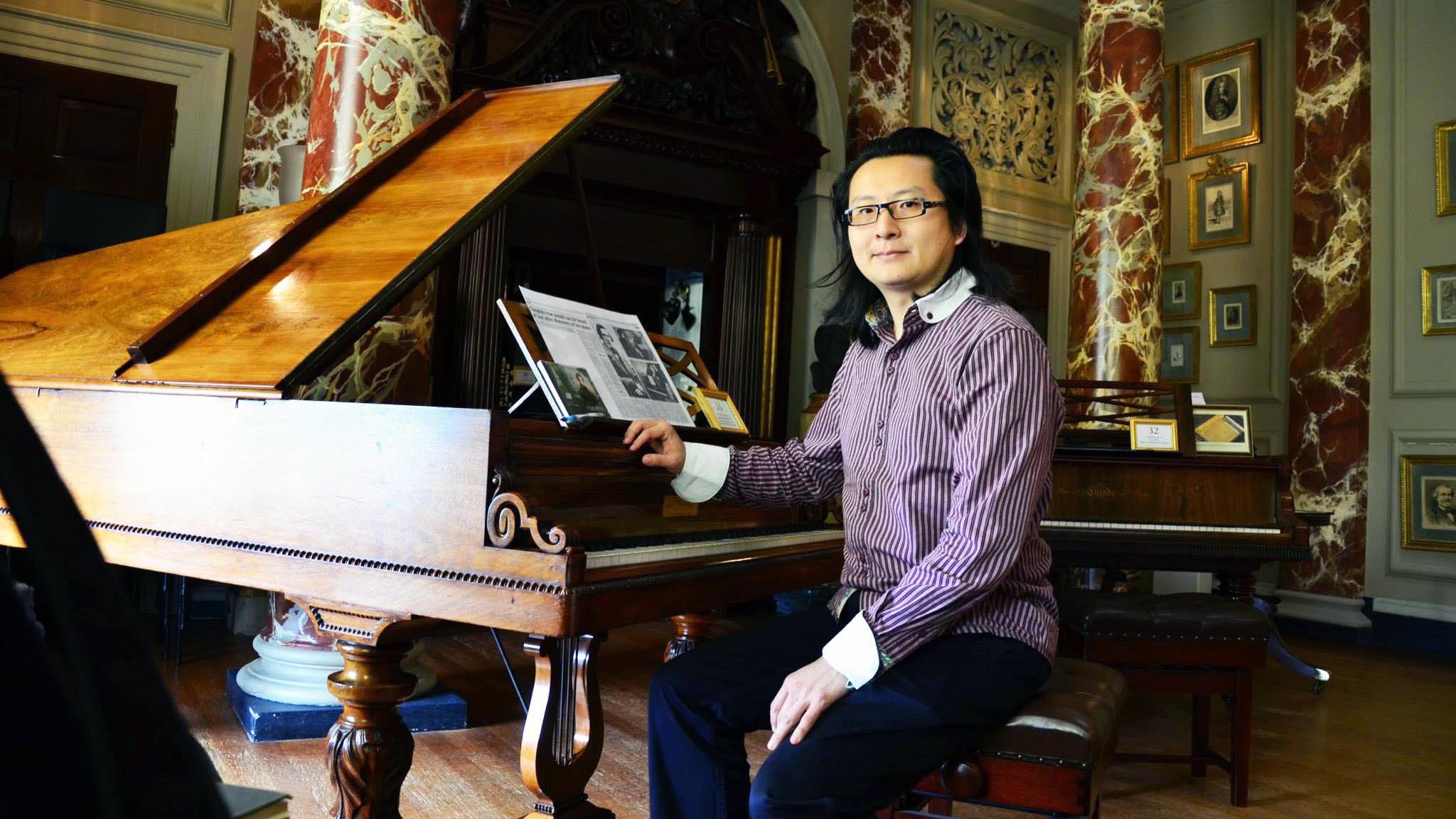
Historically Informed Performance · Course & Education
Historically Informed Performance Practice
Master authentic interpretation through historical evidence, primary sources,
and the performance traditions of the fortepiano era.
ABOUT THE COURSE
Bringing History to Life at the Keyboard
This course focuses on the art of piano performance with an emphasis on knowledge of piano technique, repertoire, and pedagogy literature — fostering each student’s individual approach to performance.
We explore the use of historical evidence — letters, treatises, and printed music — to inform our understanding of tuning, tempo, rhythm, phrasing, articulation, and dynamics, and investigate the use of period instruments in early music performance.
The goal of this course is to provide students with the tools and knowledge necessary to achieve a historically informed performance that is both aesthetically pleasing and in good taste.
Through research and personal discovery, we aim to empower musicians to bring new insights and understanding to their performances.
LEARNING OUTCOMES
What You Will Achieve
01
Understand the composer’s intentions and context through examination of primary sources such as letters and treatises.
02
Utilize historical evidence to inform choices of tuning, tempo, rhythm, phrasing, articulation, and dynamics in performance.
03
Evaluate different interpretations and make informed, tasteful choices based on historical context and research.
04
Remain open to multiple interpretations and understand the importance of flexibility in historically informed performance.
05
Communicate your own interpretation effectively and with conviction and meaning.
06
Apply your knowledge and skills to a wide range of piano repertoire across historical periods.
COURSE OUTLINE
14-Week Course Schedule
WEEK 1
Introduction to Historically Informed Performance (HIP) and the Fortepiano — overview of the importance of HIP in piano performance and examination of the unique characteristics of the fortepiano.
WEEKS 2–3
Historical Context and Aesthetics — exploration of the main players in the history of piano performance, including composers, performers, and musicologists. Examination of the concept of affekt and good taste in historical performance.
WEEKS 4–5
Structural and Technical Considerations — analysis of formal structure and harmonic function in piano repertoire, and examination of historical techniques and traditions in piano performance.
WEEKS 6–7
Rhythm and Dynamics — study of the history and influences of rhythm and dynamics in piano performance, with a focus on interpreting historical notation and indications.
WEEKS 8–9
Expression and Articulation — examination of historical practices related to expression, accents, and touch in piano performance.
WEEKS 10–11
Ornamentation and Conventions — study of historical ornamentation and conventions in piano performance, including the use of trills, mordents, and other embellishments.
WEEKS 12–13
Formal Structures and Pedaling — analysis of sonata form, theme and variations, and repeats in piano repertoire. Examination of historical pedaling practices, including the use of the damper pedal.
WEEK 14
Tempi and Metronomes — study of historical approaches to tempo and the use of metronomes in piano performance.
REQUIRED READING
Course Materials
The following texts form the scholarly foundation of this course.
01
Brown, Clive. Classical and Romantic Performance Practice, 1750–1900. Oxford University Press, 1999.
02
Parakilas, James, et al. Piano Roles: Three Hundred Years of Life with the Piano. Yale University Press, 2001.
03
Peres da Costa, Neal. Off the Record. Oxford University Press, 2012.
04
Apel, Willi. The History of Keyboard Music to 1700. Indiana University Press, 1972.
05
Rosen, Charles. The Classical Style: Haydn, Mozart, Beethoven. W.W. Norton & Co., 1988.
06
Lindley, Mark. Tuning: Containing the Perfection of Eighteenth-Century Temperament, the Lost Art of Nineteenth-Century Temperament, and the Science of Equal Temperament. Oxford University Press, 2000.
07
Girdlestone, Cuthbert. Music and Letters in the Age of Bach. Oxford University Press, 1972.
08
Koster, John. Keyboard Interpretation from the 14th to the 19th Century. Cambridge University Press, 1993.
Enroll in This Course
Develop the analytical tools and interpretive depth to unlock the full expressive potential of the piano’s historical repertoire.