Chopin’s Nocturne in E-flat Major: A Quantum Journey Through Sound and Light

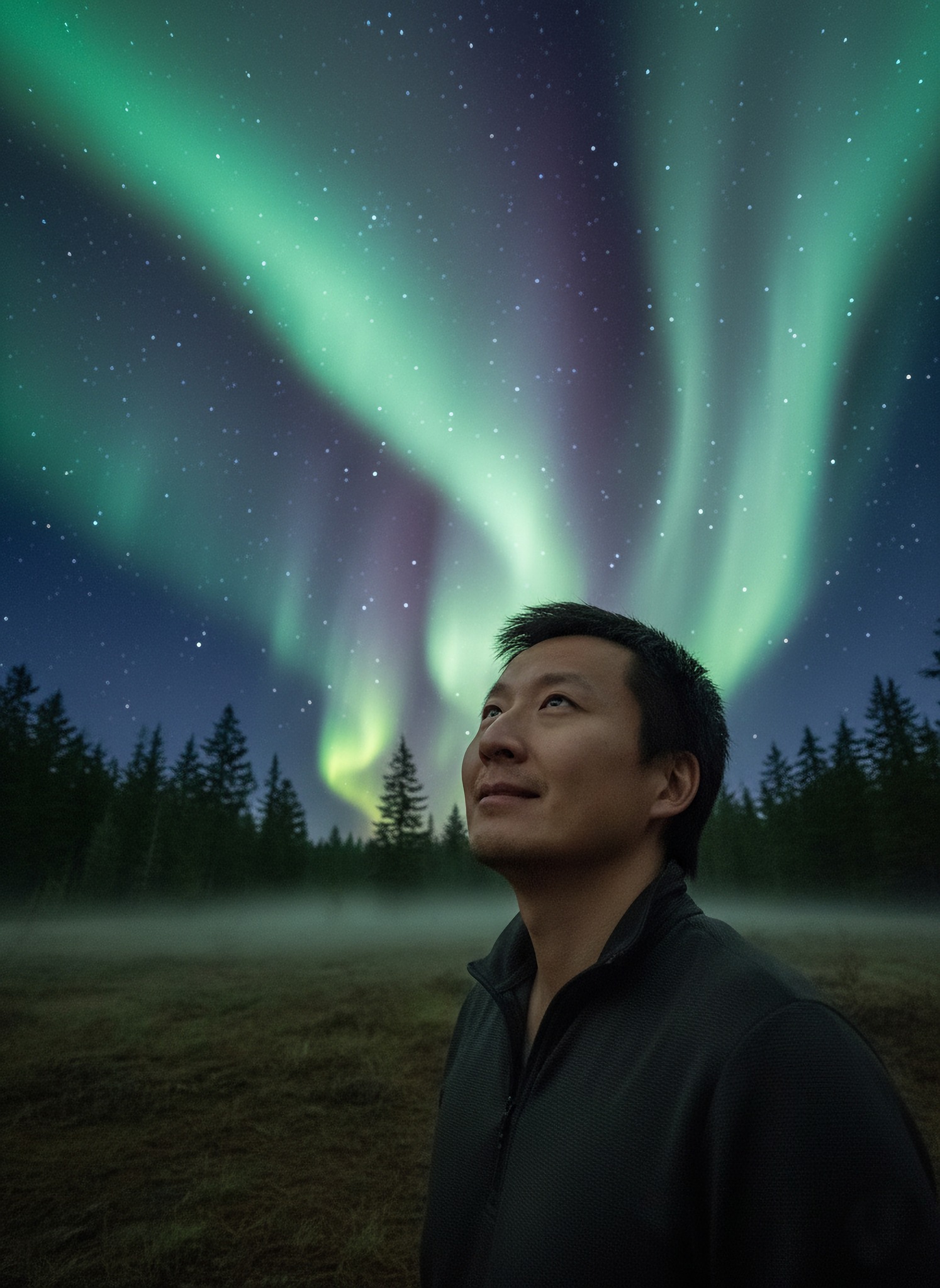
Somewhere between Chopin and the cosmos, there’s a shared truth: light and sound are just vibrations dancing at different speeds.
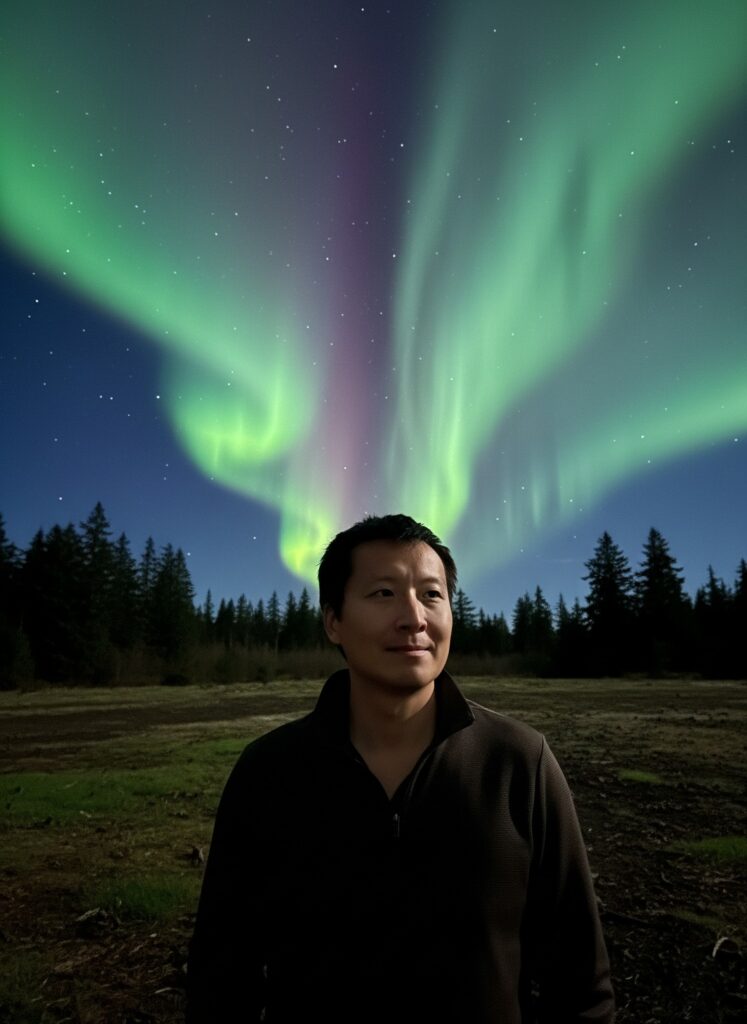
The Nocturne in E-flat major, Op. 55 No. 2, has always felt to me like the Northern Lights in musical form — layers of motion, color, and emotion moving across the same sky. Each phrase glows, fades, reappears, and somehow you feel both solitude and connection in the same breath.
Two Voices in Dialogue
If you listen closely, the piece isn’t just melody and accompaniment — it’s two voices in dialogue, weaving like auroral ribbons across the night. Contrapuntal, magnetic, and alive. Chopin wasn’t writing notes; he was bending frequencies into feeling.
The right hand sings with a lyrical, almost vocal quality — intimate and confessional, as if sharing secrets with the night sky. Meanwhile, the left hand doesn’t simply accompany; it responds, questions, and harmonizes in a conversation that feels ancient and eternal. This isn’t background support — it’s a duet between equals, each voice necessary for the other to breathe.
The Science of Beauty
And here’s the quantum bit: the Northern Lights and the Nocturne are both reminders that we’re all part of the same field. Everything is energy in motion — light, thought, sound, memory — it’s all resonance.
Physicists tell us that light and sound are electromagnetic and mechanical waves, respectively, vibrating at vastly different frequencies. Yet in our human experience of them, they converge. The aurora borealis occurs when charged particles from the sun collide with gases in Earth’s atmosphere, releasing energy as light. Music, too, is energy made manifest — air molecules compressed and released, transformed by the piano’s hammers into waves that reach our ears and, somehow, our souls.
When Chopin composed this nocturne in 1843, he was already battling tuberculosis, aware of his own mortality. Perhaps that’s why the piece feels simultaneously fragile and infinite — each phrase a fleeting moment, yet connected to something much larger than itself.
Performance as Participation
In that sense, playing Chopin under the aurora feels less like performance and more like participation. A duet between pulse and particle.
There’s something almost ceremonial about it. You’re not imposing music onto silence; you’re joining a conversation already in progress. The keys beneath your fingers become a conduit, translating one form of vibration into another. The Northern Lights dance overhead, indifferent yet somehow aware. Time bends. The boundary between performer and listener, between earth and sky, dissolves.
This is what the Romantics understood intuitively and what quantum physics is now proving: separation is an illusion. We are not observers standing apart from nature — we are nature observing itself.
An Invitation to Listen
Listen, and maybe you’ll hear the sky singing back.
I invite you to experience this recording not just as a performance, but as a meditation on resonance itself. Close your eyes. Let the contrapuntal voices wash over you. Notice how they mirror the way light ripples across the Arctic sky — never random, always patterned, eternally beautiful.
Whether you’re a pianist exploring Chopin’s late nocturnes, a physics enthusiast fascinated by wave theory, or simply someone seeking beauty in unexpected places, this piece offers something profound: a reminder that art and science are not opposites, but different languages describing the same mysterious truth.
We are all vibrations. We are all light. We are all music.
Listen, and maybe you’ll hear the sky singing back.
 Chopin: Nocturne in E-flat major, Op. 55 No. 2
Now on SoundCloud → https://on.soundcloud.com/mUbuoafg30fBWgsvdz
#ChopinNocturne #NorthernLights #QuantumPiano #MusicAndLight #Resonance #PianoLife #ArchieChen