

Share Your Thoughts
Know a connection we’ve missed? Have a correction, suggestion, or story about one of the pianists in this chart? Leave a comment below — we’d love to hear from you.
Leave a Comment
My Direct Teachers
In their studios & masterclasses
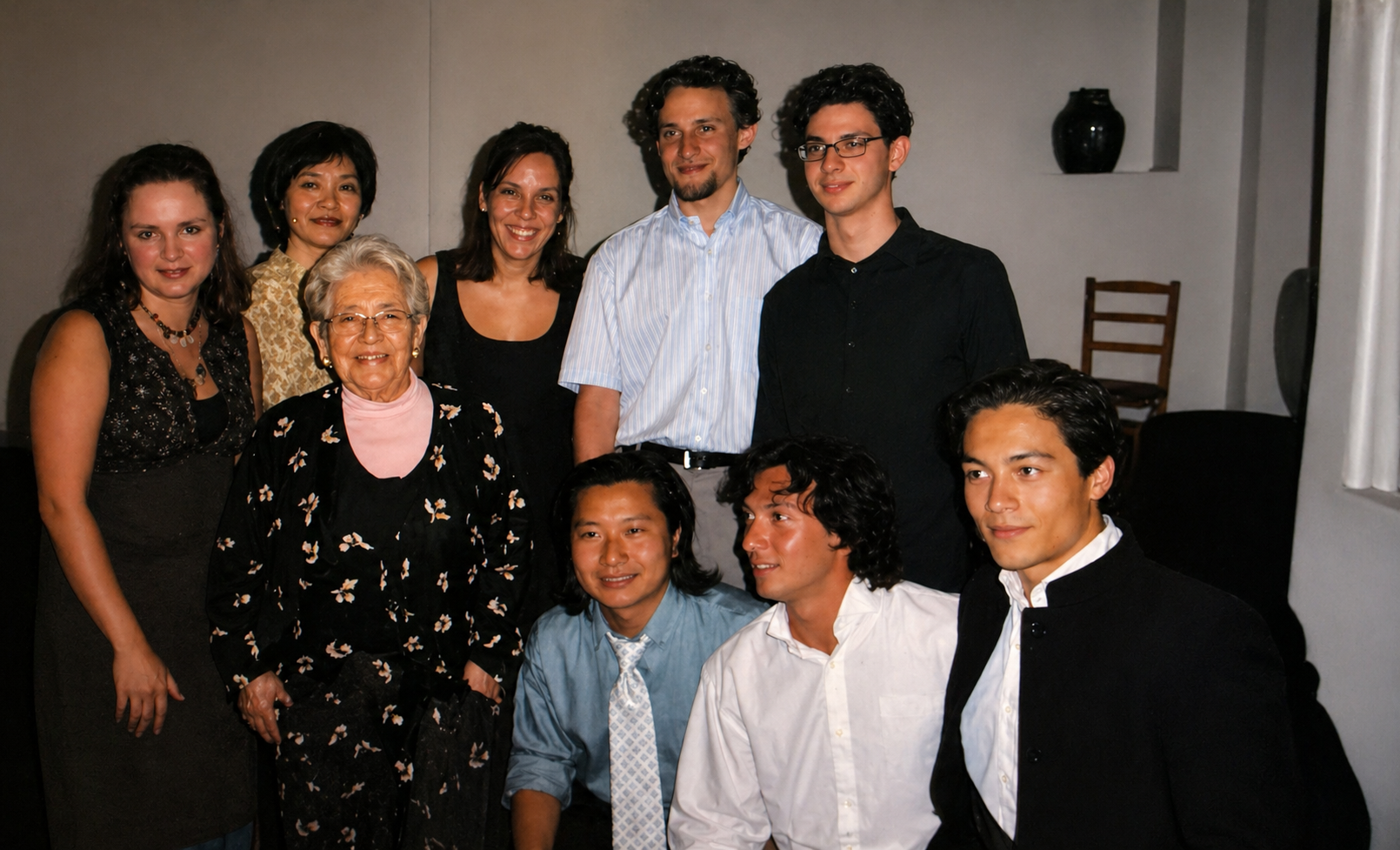
Alicia de Larrocha
Masterclass — Class of 2004
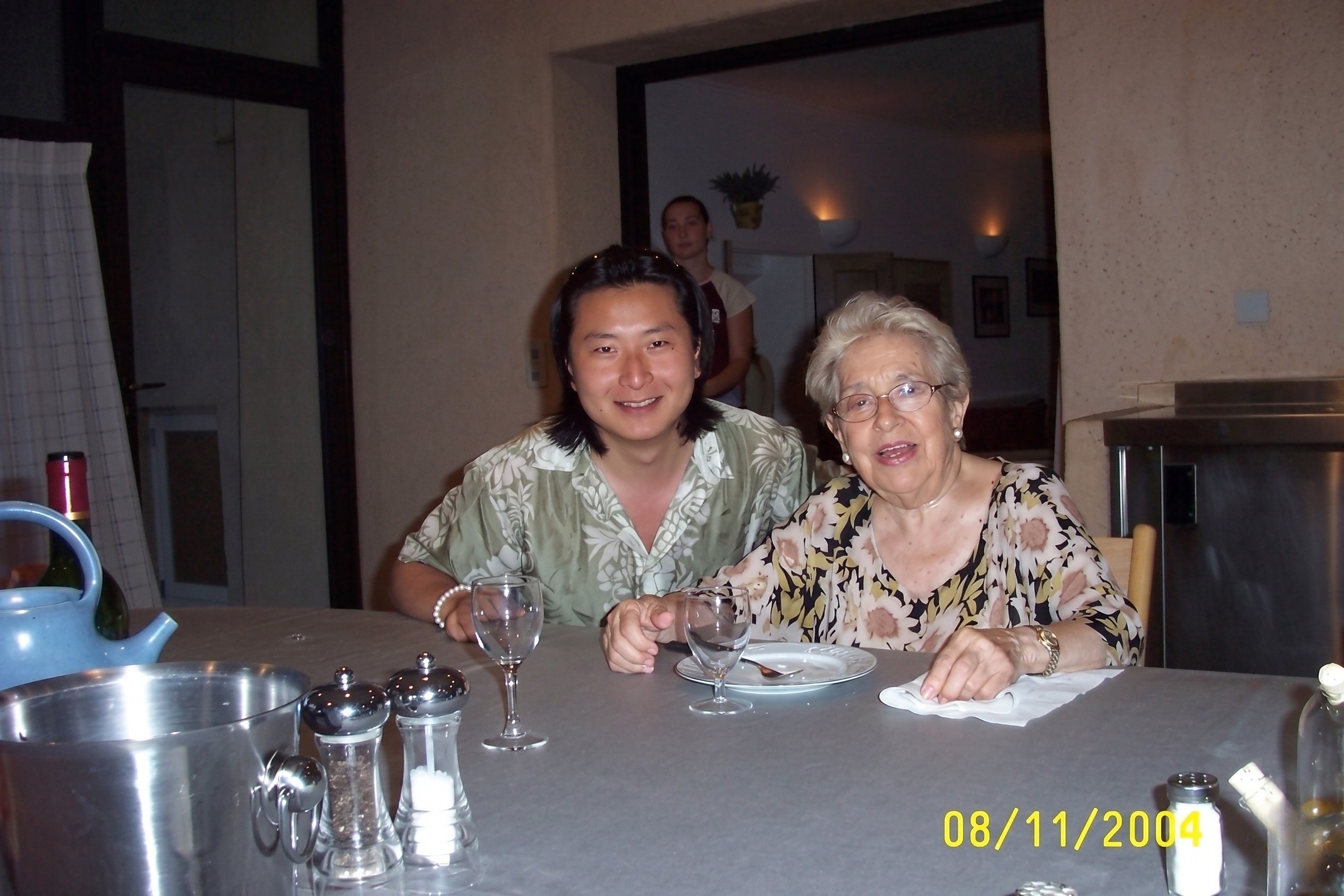
Alicia de Larrocha
With Dr. Archie Chen
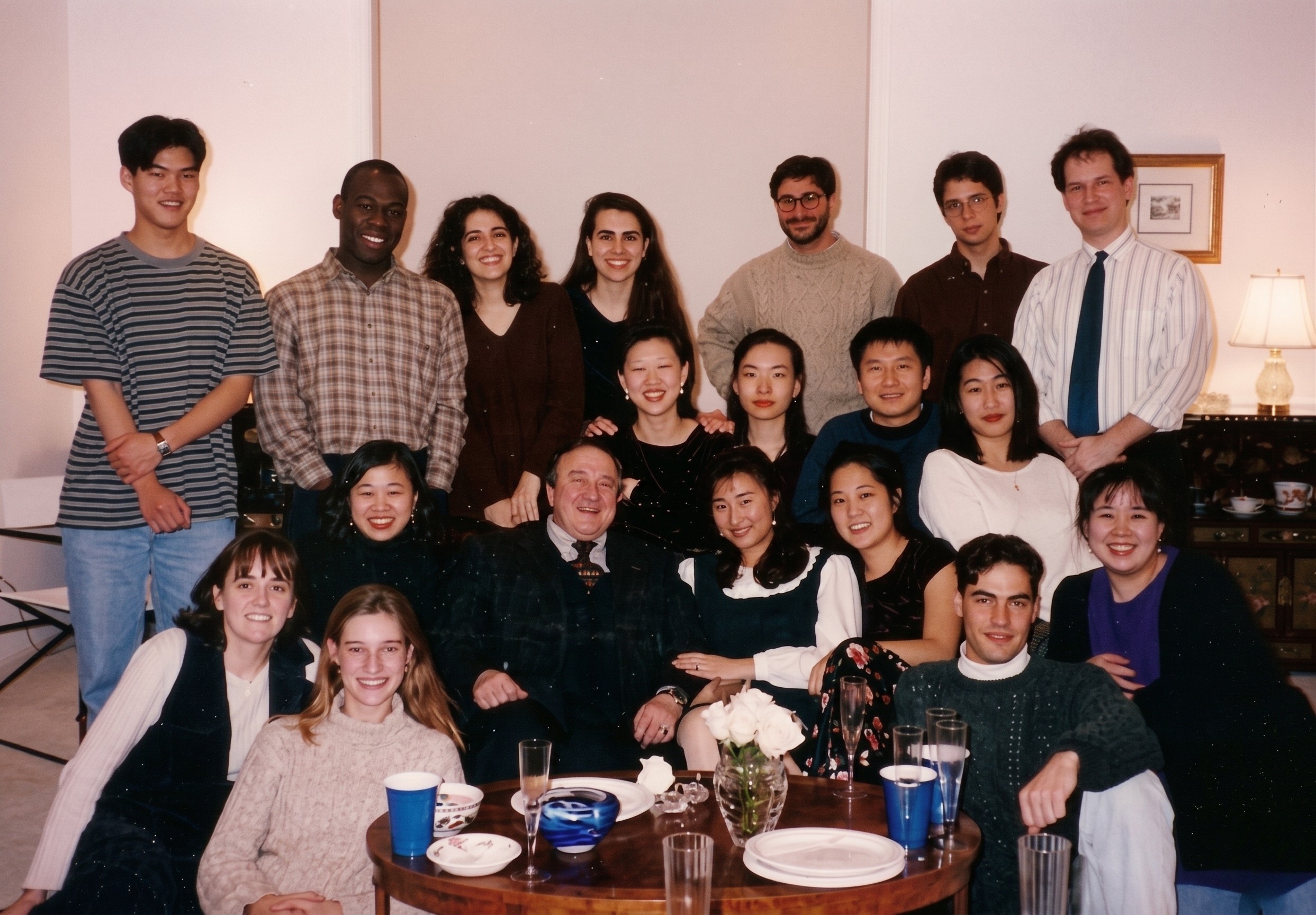
Menahem Pressler
Indiana University class
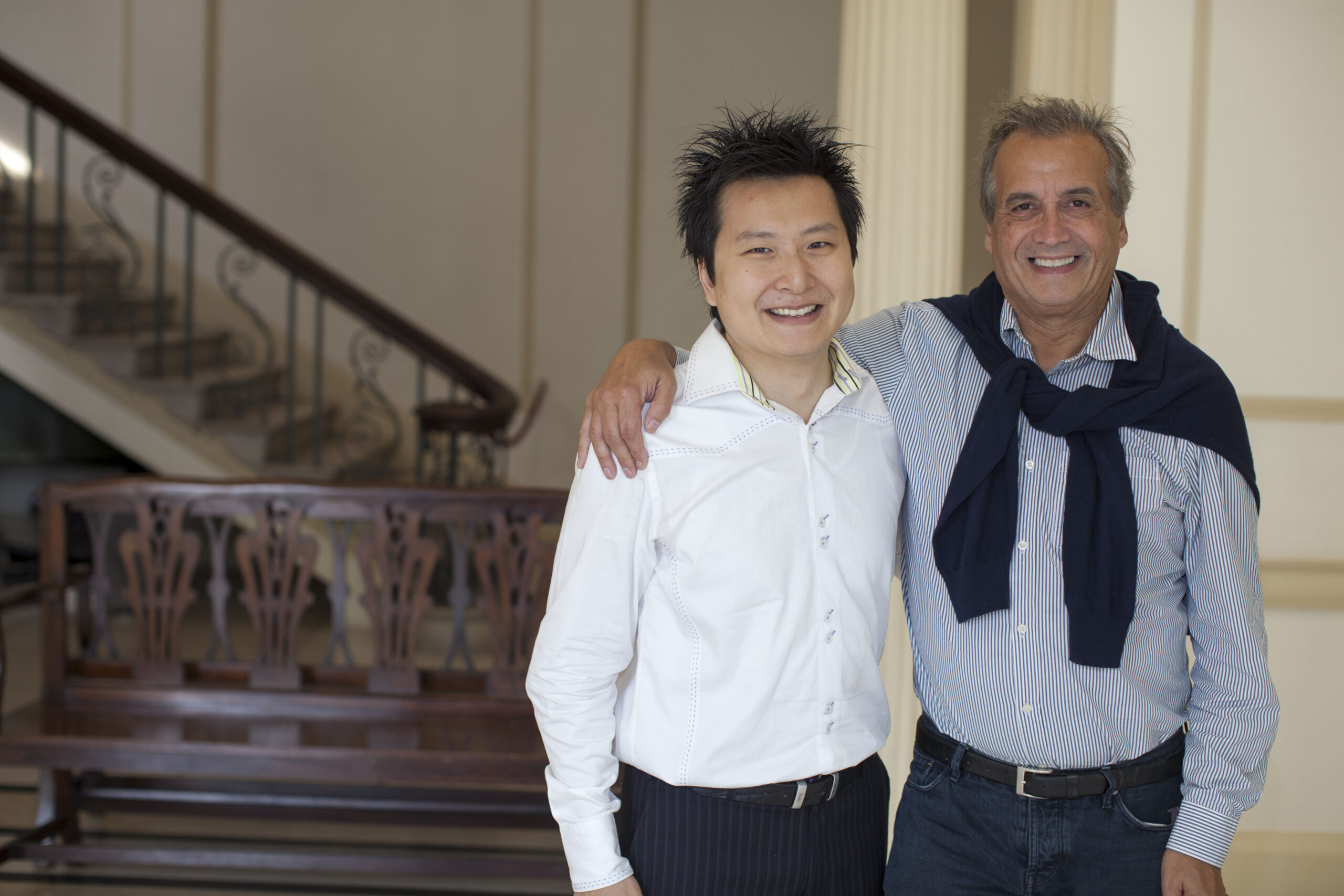
Edmund Battersby
With Dr. Archie Chen
The piano pedagogy lineage of Dr. Archie Chen traces an unbroken teaching ancestry from the keyboard masters of the 18th century to the present day. Through five direct teachers — Alicia de Larrocha, Menahem Pressler, John O’Conor, Edmund Battersby, and Leonard Hokanson — Dr. Chen’s classical piano teaching tree connects to Franz Liszt, Ludwig van Beethoven, Carl Czerny, Theodore Leschetizky, and Enrique Granados. Explore the interactive chart above to trace every branch of this teaching ancestry.
Piano Pedagogy Lineage: A Teaching Tree Spanning Three Centuries
In the classical piano tradition, the teacher-student relationship is one of its most sacred and enduring threads. Dr. Archie Chen’s piano pedagogy lineage spans over three centuries of keyboard history — from Johann Sebastian Bach and C.P.E. Bach through the great Romantic masters to the towering pedagogues of the 20th century. This piano teaching ancestry is not a single chain but a richly branching tree, reflecting the cross-pollination of schools, nationalities, and traditions that defines classical music at its deepest level.
The lineage passes through some of the most celebrated names in piano history: Franz Liszt, who studied with Carl Czerny (himself a pupil of Beethoven) and reinvented the concert recital; Theodore Leschetizky, whose Viennese school shaped generations of concert pianists; Enrique Granados, whose Spanish tradition flowed through Frank Marshall to Alicia de Larrocha; and Wilhelm Kempff, whose Beethoven interpretations defined a generation. Each of these traditions converges in Dr. Chen’s musical formation.
Dr. Chen’s Direct Teachers
Alicia de Larrocha (1923–2009) was one of the supreme pianists of the 20th century, universally regarded as the foremost interpreter of Spanish piano music. A student of Frank Marshall at the Academia Marshall in Barcelona — Marshall himself having studied directly with Enrique Granados — de Larrocha embodied a teaching ancestry rooted in Spanish Romanticism. Her influence on Dr. Chen’s musical sensibility, particularly his command of color and touch, is central to his artistry.
Menahem Pressler (1923–2023), legendary co-founder of the Beaux Arts Trio and a faculty pillar at Indiana University for 67 years, brought together multiple lineages: his teachers included Constance Véngerova, Robert Casadesus, Egon Petri, and Eduard Steuermann. Through Pressler, Dr. Chen’s piano teacher lineage reaches back through the Central European and Russian traditions that defined 20th-century concert pianism.
John O’Conor (1947–), Ireland’s most celebrated pianist and a Beethoven specialist of international stature, studied with Wilhelm Kempff — the great German pianist whose own lineage flows directly from Franz Liszt through Karl Heinrich Barth and Carl Tausig. Through O’Conor, Dr. Chen’s classical piano teaching tree connects to the unbroken Liszt–Beethoven–Czerny line, the most storied succession in keyboard history.
Edmund Battersby (1949–2016) was a distinguished American pianist and Indiana University professor known for landmark recordings of Beethoven’s Diabelli Variations on period instruments. He studied with Sascha Gorodnitzki at the Juilliard School and with Artur Balsam. Through Battersby, Dr. Chen’s piano teaching ancestry draws on the great American conservatory tradition rooted in the Juilliard lineage.
Leonard Hokanson (1931–2003) was a distinguished American pianist and long-serving faculty member at Indiana University, where he became one of the most respected piano teachers of his generation. A direct pupil of Artur Schnabel — the legendary interpreter of Beethoven and Schubert — Hokanson absorbed Schnabel’s celebrated tradition of intellectual rigor, tonal depth, and structural clarity. Through Hokanson, Dr. Chen’s teaching ancestry connects directly to the great German-Austrian piano tradition that flows from Schnabel back through Leschetizky to the heart of the 19th-century Viennese school.
Why Piano Pedagogy Lineage Matters
A pianist’s pedagogical lineage is more than a historical curiosity — it is a living transmission of knowledge, physical technique, interpretive philosophy, and musical values passed directly from hand to hand across generations. When Dr. Archie Chen teaches piano in Spokane, WA, or guides students through the international piano festivals he directs, he draws on insights that originate with Beethoven, Liszt, Chopin, and the great pedagogue-pianists of the 19th century. That continuity is what makes classical piano teaching a tradition in the deepest sense of the word.
Full Piano Pedagogy Lineage: Every Generation
The table below traces the complete teaching ancestry behind Dr. Archie Chen’s piano lineage — from the Baroque era to the present day. Each row shows a teacher–student relationship with approximate dates and national tradition. The lineage is not a single chain but a branching tree; where a pianist had multiple significant teachers, all are listed.
| Era | Teacher | Student | Tradition / School | Dates Active |
|---|---|---|---|---|
| Baroque | Johann Sebastian Bach | Wilhelm Friedemann Bach · C.P.E. Bach | German Baroque | c. 1720s–1750s |
| Classical | C.P.E. Bach | Johann Baptist Cramer | Empfindsamer Stil | 1760s–1780s |
| Classical | Johann Baptist Cramer | Ignaz Moscheles | London school | 1790s–1820s |
| Classical | Joseph Haydn | Ignaz Pleyel · Johann Nepomuk Hummel | Viennese Classical | 1780s–1800s |
| Classical | Antonio Salieri | Ludwig van Beethoven (counterpoint) | Viennese court | 1799–1802 |
| Classical | Johann Nepomuk Hummel | Carl Czerny (supplementary) | Viennese school | c. 1805 |
| Classical | Ludwig van Beethoven | Carl Czerny | Viennese Classical → Romantic | 1801–1803 |
| Romantic | Carl Czerny | Franz Liszt · Theodor Leschetizky · Sigismond Thalberg | Viennese → European Romantic | 1820–1846 |
| Romantic | Franz Liszt | Karl Heinrich Barth · Emil von Sauer · Alexander Siloti · Eugen d’Albert · Moriz Rosenthal | Weimar school | 1845–1886 |
| Romantic | Karl Heinrich Barth | Carl Tausig → Wilhelm Kempff (via Barth) | Liszt tradition | 1860s–1910s |
| Romantic | Wilhelm Kempff | John O’Conor | German Romantic / Beethoven tradition | 1920s–1970s |
| Late Romantic | Theodor Leschetizky | Artur Schnabel · Ignacy Jan Paderewski · Ossip Gabrilowitsch · Mieczysław Horszowski | Viennese / Leschetizky school | 1862–1915 |
| Late Romantic | Artur Schnabel | Leonard Hokanson · Claude Frank · Leon Fleisher | Leschetizky → Schnabel tradition | 1920s–1951 |
| Spanish | Enrique Granados | Frank Marshall | Spanish Romantic | 1900s–1916 |
| Spanish | Frank Marshall | Alicia de Larrocha | Academia Marshall, Barcelona | 1930s–1950s |
| 20th Century | Ignaz Moscheles | Joseph Joachim → leads to Central European tradition | Leipzig Conservatory | 1840s–1860s |
| 20th Century | Constance Véngerova | Menahem Pressler | Russian / American school | 1940s–1950s |
| 20th Century | Robert Casadesus · Egon Petri · Eduard Steuermann | Menahem Pressler | French / Central European | 1940s–1950s |
| 20th Century | Sascha Gorodnitzki (Juilliard) · Artur Balsam | Edmund Battersby | Juilliard / American school | 1960s–1970s |
| Present | Alicia de Larrocha · Menahem Pressler · John O’Conor · Edmund Battersby · Leonard Hokanson | Dr. Archie Chen | Multiple traditions converging | 1990s–2000s |
Cite This Page / Embed the Lineage Chart
Researchers, educators, and music bloggers are welcome to cite or embed this lineage chart with attribution. Please use one of the formats below.
MLA Format
Chen, Archie. "Piano Pedagogy Lineage: Beethoven · Liszt · Leschetizky to Dr. Archie Chen." archiechen.com, 2026, https://www.archiechen.com/piano-pedagogy-lineage/.